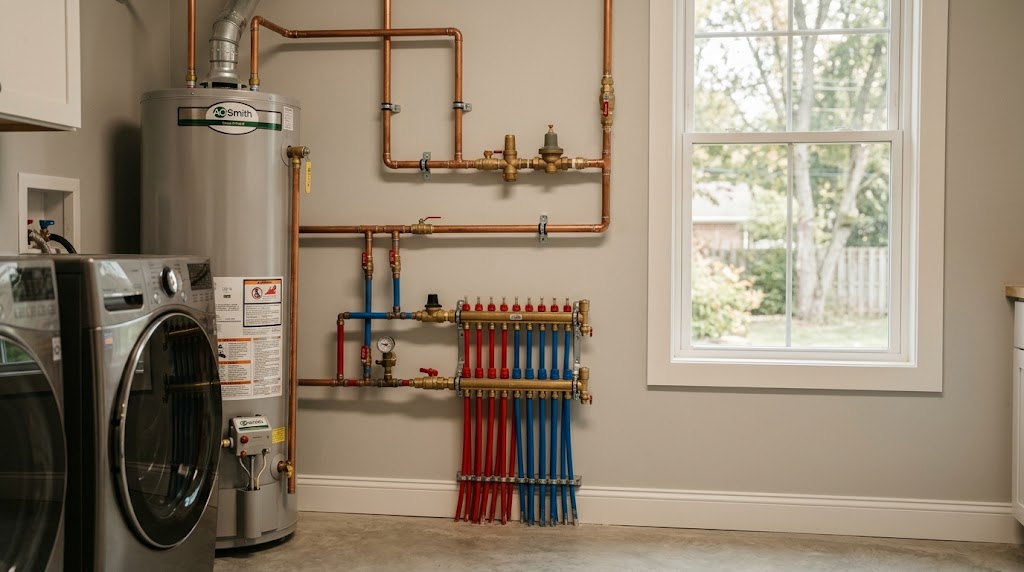
When Is Whole-Home Repiping Necessary in
In many established Keizer residences constructed prior to the late 1980s, the domestic water supply system was built using galvanized steel piping or early copper formulations. Over decades of constant exposure to municipal water, galvanized pipes corrode from the inside out. Rust and mineral tuberculation build up internally, narrowing the pipe diameter like a clogged artery until water pressure drops to a trickle.
While fixing an isolated pipe leak with a temporary clamp or short coupling solves an immediate crisis, multiple recurring leaks across different rooms indicate systematic pipe wall degradation. Whole-home repiping replaces all accessible hot and cold domestic supply lines, eliminating chronic leak anxiety and restoring clean, strong water pressure.
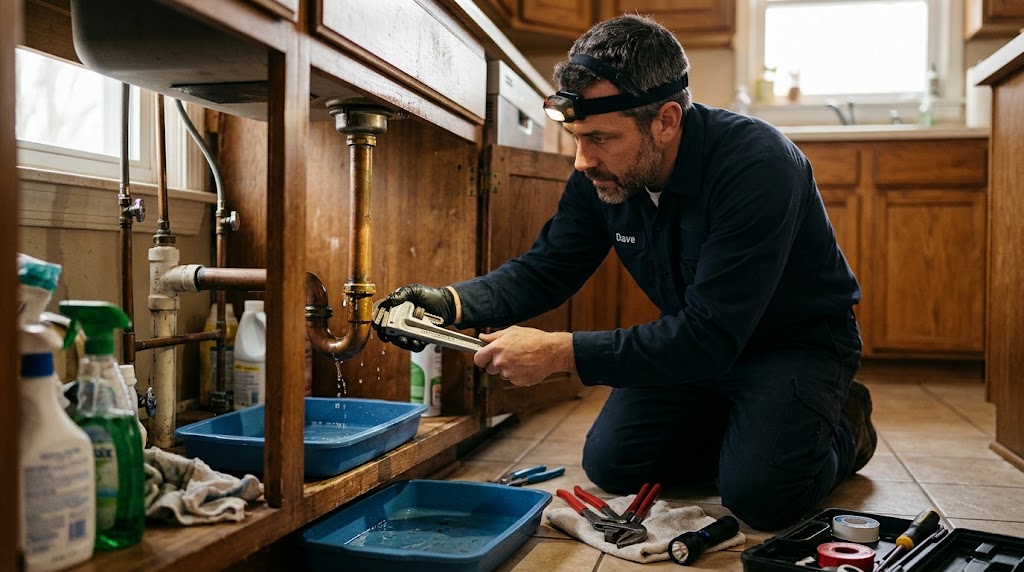
Indicators Your Home May Need Whole-House Repiping
Property owners in Marion County often notice these symptoms when plumbing supply pipes reach the end of their design lifespan:
- Frequent Recurring Leaks: Having two or more separate pipe leaks within a year indicates widespread wall thinning throughout the piping system.
- Severe Water Pressure Drops: Water pressure plummeting when a second fixture is turned on—for example, a shower becoming a trickle when the washing machine starts filling.
- Discolored, Reddish Water: Brownish or rust-tinted water flowing from taps after leaving fixtures unused overnight, signaling internal pipe oxidation.
- Metallic Taste or Odor: Water carrying a distinct iron or chemical mineral flavor.
- Visible Flaking or Corrosion: Green oxidation crusting on copper joints or white chalky scaling on galvanized pipe threads in basements and crawlspaces.
Pinhole Leaks vs. Systematic Pipe Failure
An isolated pipe rupture due to winter freezing can usually be repaired with a localized section replacement. However, if multiple pinhole leaks develop under ordinary operating pressure without freezing, the entire pipe material has degraded and whole-home repiping is recommended.
Modern Pipe Materials: Why PEX-a Leads the Trade
Today, whole-home repiping is predominantly performed using cross-linked polyethylene (PEX-a) or Type L rigid copper:
- PEX-a (Cross-Linked Polyethylene): Highly flexible, scale-resistant, and chemically inert. Because PEX can bend around structural framing without requiring joints at every turn, repiping can often be completed with minimal wall incisions. PEX also expands slightly under freezing conditions, offering superior burst resistance during Pacific Northwest cold snaps.
- Copper (Type L): Traditional, rigid, long-lasting metallic piping favored by certain homeowners for exposed mechanical spaces.
The Repiping Process: What to Expect
Repiping a residential property in Keizer follows an orderly sequence designed to minimize household disruption:
- Pre-Project Assessment & Permitting: Technicians map water manifold routes and secure necessary Oregon Plumbing Specialty Code permits.
- Strategic Access Cuts: Small, surgical incisions are made in drywall to feed flexible tubing through studs.
- New Pipe Installation: Dedicated hot and cold lines are routed to every fixture, complete with new quarter-turn ball valves and supply stops.
- Pressure Testing & Inspection: The system is subjected to high-pressure pneumatic testing to verify complete joint integrity before being tied to the city water supply.
- Wall Patching & Site Cleanup: Drywall cutouts are professionally patched, leaving your home clean and fully operational.